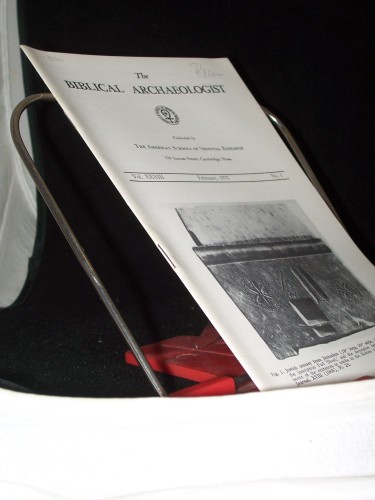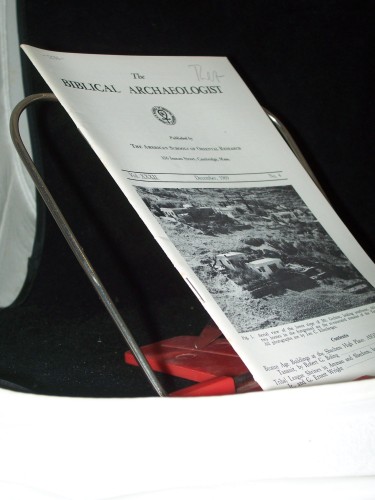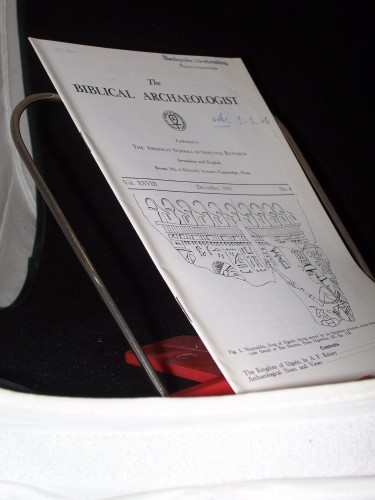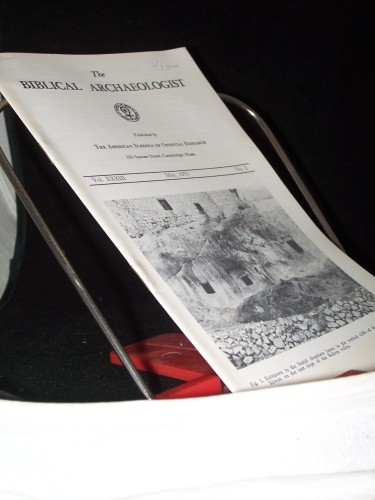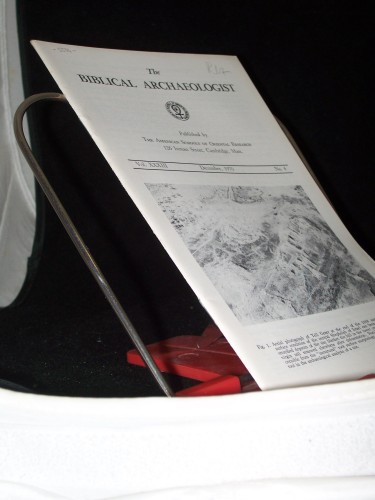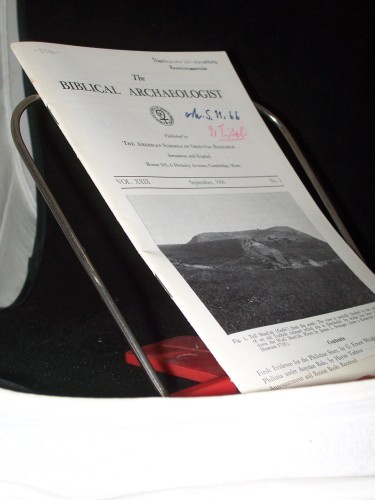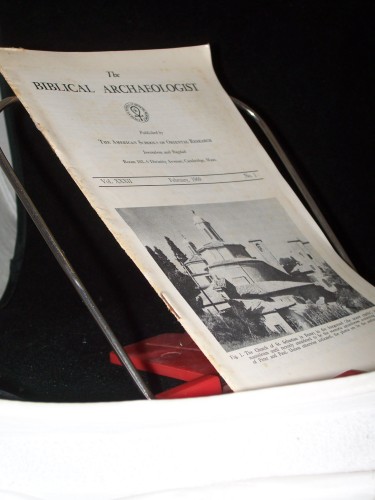
Contents
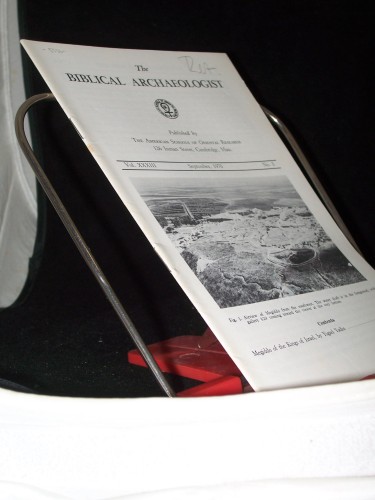
Arad: Its Inscriptions and Temple, by Yohanan Aharoni 2
Archaeological News and Views 32
Arad: Its Inseriptions and Temple
YOHANAN AHARONI
Hebrew University, Jerusalem
The border and desert regions hardly constitute optimum conditions
for human habitation. They definitely do, however, create ideal sites for
archaeological investigation; this is further facilitated by man. Border fortress-
es and settlements are outposts of civilization and, as such, are the prime
targets of marauders and invaders. This makes for numerous occupational
levels over short periods, usually well covered by thick layers of debris. Pre-
servation of finds is aided by arid conditions and fine-grained wind-borne
loess soil, which quickly covers a site.
These, together with the importance of ancient Arad in its heyday, are
the reason for its Singular and special interest. They account for the remark-
able state of the remains, for the detailed stratigraphy, and for the astonishing
yield of inscriptions. For the first time in Palestinian archaeology, most of the
strata are accompanied by literary remains, contributing much towards their
interpretation and chronology.
As often with excavations, hexe no simple solution or easy corroboration
of the written material is readily at hand. Reality is always much more com-
plicated than historical raw materials seem to indicate. Indeed, after five sea-
sons of excavations,1 the "King of Arad who dwelt in the Negeb" (Num.
Einband leicht berieben, sonst ordentlich und gut erhalten
- Verlag:
- published by the American Schools of oriental Research 126 Inman Street Cambridge, mass.
- Heft, 32 Seiten
- Artikelnummer:
- B00056475
- Gewicht:
- 400 gr
- Lagerplatz:
- Z6_2_12